


New Routes, New Markets: Gebrüder Weiss and the “China + One” Shift
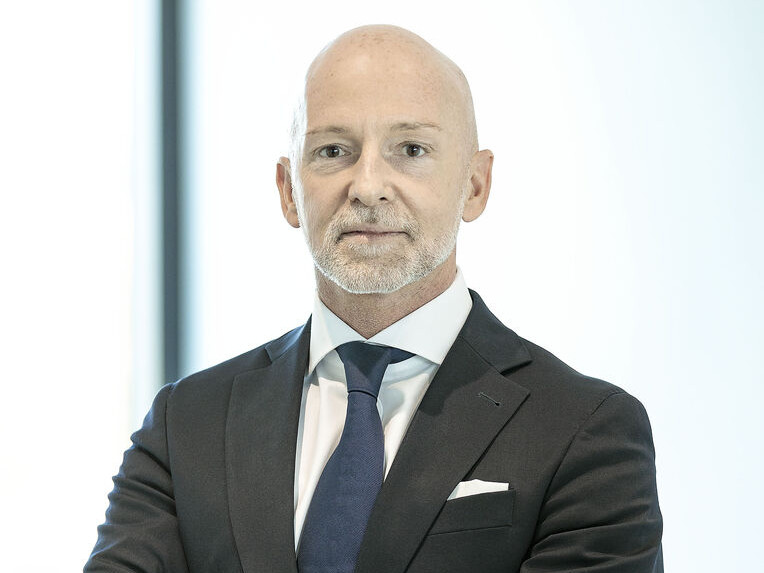
Strong performance, excellent connectivity, modern capabilities, and close customer relationships: these are the foundations of Gebrüder Weiss’s growth strategy in air and sea freight forwarding. The new COO Air & Sea + Overseas is focusing on thriving markets in Central Asia, Southeast Asia, and other high-growth regions.
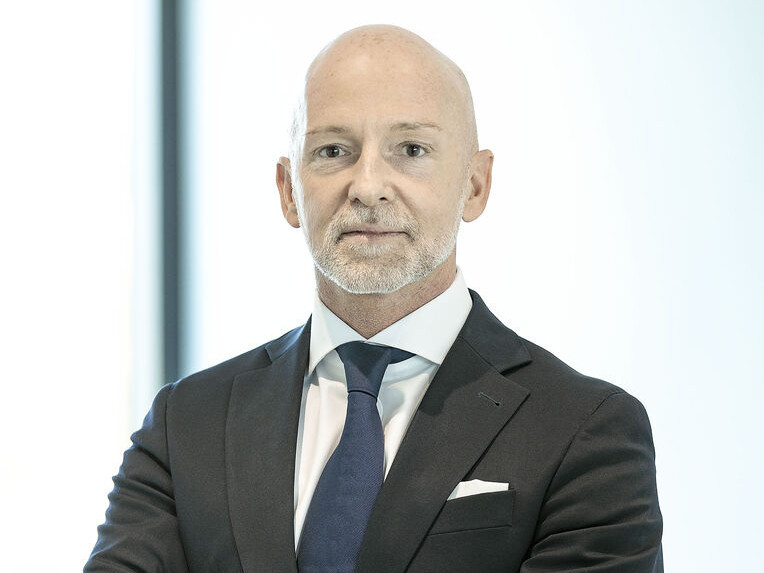
Alessandro Cacciola is responsible for 1,900 employees across locations in 35 countries. In his view, this places Gebrüder Weiss among the larger owner-managed mid-sized companies in global air and sea freight forwarding. The 49-year-old logistics executive assumed the role of COO Air & Sea + Overseas in March. In 2025, the Vorarlberg-based family-owned company handled approximately 81,000 tonnes of air freight and 198,000 TEU of ocean freight worldwide. To achieve this, its specialists successfully combine “International Reach & Personal Touch” with both physical and digital expertise.
According to Alessandro Cacciola, there is substantial customer demand for exactly this combination. He describes Gebrüder Weiss as modern, agile, and people-oriented. In the 2025 financial year, the Air & Sea + Overseas division generated more than EUR 900 million in revenue, representing roughly one-third of the total business volume of the transport and logistics provider, which currently employs around 8,600 people across 180 locations worldwide. Management is confident that air and sea freight operations will soon surpass the EUR 1 billion annual revenue mark. To achieve this and maintain its global competitiveness, the company continues to digitize numerous process steps.
At Gebrüder Weiss, however, personal customer service remains a decisive factor. Customer relationships will continue to be managed by people. At the same time, digitalization works in the background, enabling employees to access relevant information more quickly, better understand complex relationships, and respond to customer inquiries more efficiently. Digital support therefore creates more time for what matters most: personal interaction, enhanced consulting, and a stronger customer experience. At Gebrüder Weiss, this approach is known as the “Best of Both Worlds” strategy, combining close customer relationships with the advantages of digital technology.
Alessandro Cacciola’s leadership philosophy is shaped by the principle of “radical acceptance.” Developments that impact the present, whether geopolitical or otherwise, and that cannot be influenced by a company, should first be accepted as reality without complaint or frustration. What matters, he says, is acting quickly together with the team. “Finding flexible solutions to unexpected challenges is part of our daily business,” emphasizes the GW executive in an interview with LogEASTics magazine.
The market continues to be characterized by highly fragmented and increasingly diversified supply chains. In pursuit of greater resilience, manufacturers are broadening their production and sourcing structures, whether through “China + One” strategies, nearshoring initiatives, or the development of additional production locations. This creates new trade flows, transport corridors, and logistics hubs. New markets are emerging, along with growing demand for flexible and reliable transport solutions. For Gebrüder Weiss, this means continuously monitoring and actively shaping these developments together with customers and beyond.
The logistics group aims to be present wherever new markets and trade flows emerge in order to provide customers with the right solutions, from alternative transport routes to entirely new logistics concepts. Alessandro Cacciola identifies Vietnam, Malaysia, Thailand, Indonesia, and Mexico as particularly important growth markets. The Philippines should not be overlooked either, given their historically close economic ties with the United States. This provides a certain degree of stability regarding tariffs, which have dampened trade on other intercontinental routes. Another example is the growing importance of new transport corridors between Asia and Europe. The Middle Corridor is one such route that is gaining significance as trade flows evolve.
For the GW executive, it is clear that “we will strengthen our position in these countries and in Türkiye in the years ahead.” He highlights the Middle Corridor from China via Kazakhstan and Georgia into Europe as a particularly promising transport route. Gebrüder Weiss is already offering solutions along this corridor, ranging from dedicated block trains connecting Asia and Europe to a recently established groupage service from China to Georgia by truck. In his view, this flexibility represents a distinctive competitive advantage, as such customized solutions remain the exception rather than the norm in these markets. Looking ahead, he also announces a southern extension of the Middle Corridor, routed through Uzbekistan. To support these developments and strengthen its presence in the Black Sea region, the company has established its own branches in the Caucasus and Central Asia in recent years. “We are already on the ground and can offer our customers the full spectrum of logistics solutions.”
Alessandro Cacciola remains relaxed about the trend toward vertical integration initiated by several container shipping lines. He describes it as “a logical development in a complex market.” Nevertheless, most transport and logistics customers prefer working with neutral partners who are not tied to specific carriers or ports. The resulting flexibility clearly benefits shippers and manufacturers. Gebrüder Weiss is committed to contributing actively in this area. “Cargo always finds a way. By continuously evaluating, developing, and marketing new transport routes, we create ongoing opportunities for our customers to differentiate themselves in global competition,” promises Alessandro Cacciola.
This article was published on October 15, 2026, in issue 10/2026 of LogEASTics, the magazine of Österreichische Verkehrszeitung. The original text was translated from German into English with the assistance of AI.
About Gebrüder Weiss
Gebrüder Weiss Holding AG, based in Lauterach, Austria, is a globally operative full-service logistics provider with about 8,600 employees at 180 company-owned locations. The company generated revenues of 2.72 billion euros in 2025. Its portfolio encompasses transport and logistics solutions, digital services, and supply chain management. The twin strengths of digital and physical competence enable Gebrüder Weiss to respond swiftly and flexibly to customers’ needs. The family-run organization – with a history going back more than half a millennium – has implemented a wide variety of environmental, economic, and social initiatives. Today, it is also considered a pioneer in sustainable business practices. www.gw-world.com