



Search
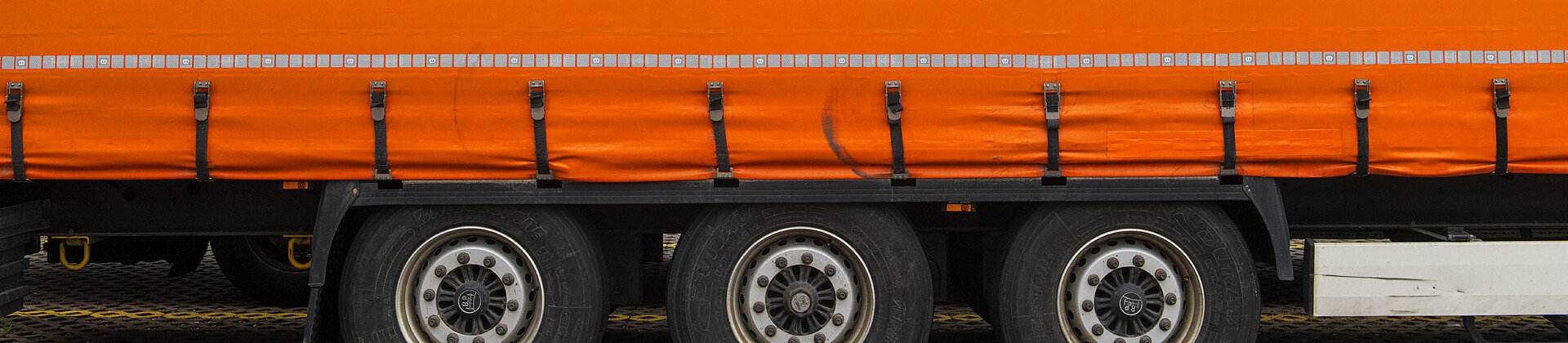
Whether it's flammable liquids, corrosive chemicals, or seemingly harmless everyday products like detergents or cosmetics, the transportation of hazardous materials is subject to strict regulations and clearly defined responsibilities. Even small mistakes in declaration, packaging, or labeling can have serious consequences. On this page, we take a closer look at the most important aspects of transporting dangerous goods.
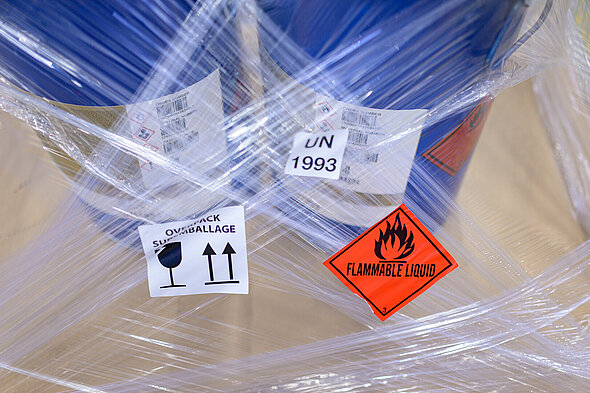
Dangerous goods or hazardous materials (hazmat) refers to any substance or object that may pose a risk to people or the environment during transportation. This includes not only obviously dangerous goods, but also items that you might not immediately associate with dangerous goods, such as:
Hazardous materials must be declared as such by the shipper, correctly labeled, and properly packaged. When placing the order, the customer must already inform the carrier about the special nature of the dangerous goods.The information required for the declaration can be found in the product’s Safety Data Sheet (SDS). The manufacturer of the goods is responsible for keeping the Safety Data Sheet up to date and must provide it upon request.
The transport documents containing the appropriate declaration must be handed over to the driver before the journey begins.If the regulations for the transport of dangerous goods are not complied with, substantial fines may be imposed on all parties involved during an inspection. In such cases, fines are usually issued to the shipper, the customer, the loader, the driver, and the carrier/forwarding company.This means that all parties involved must thoroughly familiarize themselves with the topic. Responsibility cannot be shifted from the customer to the carrier or vice versa. The carrier must be able to rely on the accuracy of the information provided by the customer.
If an accident occurs due to undeclared or misdeclared dangerous goods in air freight, the shipper is solely liable for the resulting damages.
Therefore, it is essential to be aware of the exact contents of the shipment! All dangerous goods must be declared (using the "Shipper's Declaration for Dangerous Goods" form) and packaged according to regulations. The "Shipper's Declaration for Dangerous Goods" must be signed by the shipper and includes all critical information about the product, the required packaging, and the UN number (the product's dangerous goods identification number).
To declare dangerous goods, you need specific details, such as:
Regulations are constantly being updated, for example, regarding the "all-cargo aircraft only" label or the "known consignor" status. Gebrüder Weiss has several specialists who can provide you with precise information about the Dangerous Goods Regulations. For export shipments, a written security declaration is currently required under an EU regulation to obtain "Known Consignor" status. (Please note current EU regulations, as legal frameworks are subject to change.) For the latest information, please contact your local Air & Sea office.
As with air freight, if an accident occurs due to undeclared or misdeclared dangerous goods in sea freight, the shipper or principal is solely liable for the resulting damages.
All dangerous goods must be declared using the "IMO Declaration for Dangerous Goods" form and packaged according to the IMDG Code regulations, as well as the ADR or RID regulations for any pre-carriage or on-carriage by rail. The shipper must complete and sign the "IMO Declaration for Dangerous Goods" form in original. A copy of the declaration should be sent to the carrier before transport begins. Important: In all correspondence, please provide the exact technical name of the goods, the hazard class, and the UN number.
The IMDG Code is subject to continuous updates. The specialists at Gebrüder Weiss will be happy to advise you on this as well.
ADR
ADR is short for "Accord européen relatif au transport international des marchandises Dangereuses par Route" (European Agreement concerning the International Carriage of Dangerous Goods by Road). It is an international agreement that regulates the transportation of dangerous goods by road. ADR covers packaging, labeling, vehicle equipment and training requirements and serves as the core regulatory framework for the road transportation of dangerous goods.
RID
RID is the regulation governing the international carriage of dangerous goods by rail.
UN-Nummer
A four-digit number assigned by the United Nations to uniquely identify hazardous materials. The UN number is used worldwide and must appear on packaging, shipping documents, and transport vehicles.
Hazard Labels
Pictograms affixed to packaging and vehicles to visually indicate the type and class of hazardous material (e.g., a flame symbol for flammable substances). These labels are crucial for quick identification in emergency situations.